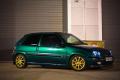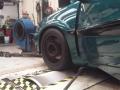
6300 rpm flat line with cams

  1. #1
    I have the following items fitted to my car :

    Catcams 708's with Remap
    De cat
    Magnex 2" 2 box Exhaust
    Ashley 4-2-1 Manifold
    Raceland Filter with Big Filter fitted

    The car made good power as standard 127 bhp with the big filter & exhaust with a nice power curve


    After fitting 708's & extensive live mapping & playing with cam timings, we are hitting a restriction & making 143 BHP ( compressions are all good) (the air filter is not restricting it at all)

    We can make the car make max power higher but the BHP figure is lower.


    What to try changing next ? Anyone else come across this after camming ? Cars at Chip wizards regularly make over 160 BHP with the same setup.

  2. #2
    I'm in no way slating Chipwizards (I've heard nothing but good things about them), but I feel their RR results are a tad optimistic. At one of their rolling road days, a 106 GTI with breathing mods (CAT still in exhaust) made in the region of 140bhp ATF. Imo, any sort of comparison between your results and a car with a print out from Chipwizards is void. However, looking at a 'before and after' of a car mapped at Chipwizards should give you something to compare with.

    I'll probably be told otherwise, but going off your before and afters, I'd say that result is near as damnit for the spec you have.

    Can you feel an improvement when driving it?
  3. #3
    What were your wheel figures?

    "fast road" cams make anything between 140-150bhp depending on condition as alll engines are different, so i'd say 143 is pretty damn good. Mine is only 137bhp!
  4. #4
    whats the condition of the manifold and exhaust?

    Does it feel any quicker over standard?
  5. #5
    put it on waynes rollers and it will probably make 155-160.

    Is there another set of rollers you can do a power run on? As if the technicians are finding no faults with the engine readings then it may help clear the worries.
  6. #6
    Quote:
    Originally Posted by Colin View Post
    What were your wheel figures?

    "fast road" cams make anything between 140-150bhp depending on condition as alll engines are different, so i'd say 143 is pretty damn good. Mine is only 137bhp!
    like colins said if they are your wheel figures then thats good i got 138.6 with a similler setup
  7. #7
    Yer dnt look at the figure to much most cammed vts are 140 150 on the max side not 160!!!!

    If it fells better then dnt worry about the figure to much.
  8. #8
    did Wayne map it?

    What ECU did you use?
  9. #9
    Well mines a strange one. Wheel figure is 124bhp and fly is 137bhp. Or if you do the + 10 / 0.9 it equates to roughly 148bhp which is about right imo.

    Upto 40bhp from a set of cams and exhaust etc is alot!
  10. #10
    Ok , I am not sure how to do a multi quote, but I will answer everyone :

    Leeumh : The car is deffo quicker than it was & pulls hard above 7000 rpm

    Colin : Sorry mate don't know the wheel figures

    Steve : The manifold is brand new From Ron, The exhaust is good nick (wea had to repair a 5mm hole from speed bump damage on the edge of the center box) Sound nice no blowing

    Ryan : I can take it to motoscope which is not too far


    The Lad who has mapped the car is spot on & preps loads of race 106's & citreons. He is will to let me change stuff & then have another go at mapping it. Plus he is local.

    He feels there is a bit more to come out of the car, due to if flat lining & making peak power too early.

    Just don't know whether to change the back box, manifold , or whack a saxsport on

    Need some help
  11. #11
    Quote:
    Originally Posted by Steve View Post
    did Wayne map it?

    What ECU did you use?
    I used Tispsey's old ECU that was mapped by wayne, The Lad had to change loads on the map. My car was also live mapped whilst running on the rollers, He has put a new port on the side of the ECU to plug his lappy direct into it.
  12. #12
    to multiquote hit the ''+ icon next to quote for all the quotes you want. then Quote button on the last.
  13. #13
    Jonathon mate mine on pd tunings rollers made 146bhp ph3's always seem to give a bit more power so your power figure is in the right area if you were on dyno dynamic rollers.
  14. #14
    Quote:
    Originally Posted by saxo_ron View Post
    Jonathon mate mine on pd tunings rollers made 146bhp ph3's always seem to give a bit more power so your power figure is in the right area if you were on dyno dynamic rollers.
    Was that after it had been to waynes ? or before

    Loads of similar spec cars are making 157 to 163 on waynes

    Has anyone been to chip wizards & then gone elsewhere & repeated the figures ?
  15. #15
    Initially got 155bhp at waynes (chipwizard) then 146bhp at pd tuning (change of exhaust to a manic motors piper) then made 159bhp at waynes.
  16. #16
    for a reference, car of your spec on our rollers typically makes around 130 @ the wheels.

    obviously all dynos read different, and the variables within the car also change, so for consistant back to back testing it can only be carried out on the same rolling road unless you know what the difference is between two dynos.

    horsepower figures aside.

    if the power is "flat lining" we normally find this is due to an exhaust restriction, either in the system itself, or in the cam lag.

    i cant see particularly clearly from the graph what the numbers are, the scale seems all odd (but then again i am used to dyno-max 2010 pro)

    start with basics that would determine your max power and @ what rpm. cam timing - shouldnt be too hard with 708s, but mistakes do happen - a worthwhile a check. its best to do this on the rollers that way mapping alterations can be accomodated to match cam changes (shouldnt be a lot @ WOT on a 708 but sometimes can effect light throttle cruise)

    also, re check dyno information. only takes a mistake when entering one of the information fields, e.g. gear ratio (or tyre size to roller ratio) or tyre size. and this can give a false RPM reading.

    and as we know RPM is the constant calculating factor in hp, so if the dyno to car rpm isnt synchronised, it can cause incorrect results. i.e. horsepower being shown to drop off sooner or later than is correct, or indeed higher or lower figures.

    we generally synchronise this RPM @ roughly 60-70% of max engine RPM, takes longer but its more accurate this way. (e.g a 7000rpm engine we will sync at 4000rpm) you may notice at car shows this being performed on mobile rolling roads at much lower RPM.. purely as its faster, and they can do more cars this way, but not as accurate. a 1% mistake at 2000rpm is amplified at 8000rpm.

    - colin.
  17. #17
    Watch out for happy dynos ;p!
  18. #18
    always ask for power@ wheels,as that is what the dyno is measuring ,fly wheel figures are a calculation of some kind, then if its a reasonably std g/box etc add around 25bhp --if the dyno says its more then watch out .
    power at wheels is what makes car go --maybe you had lots of wheelspin on the rollers,as you say the car goes well on the road --so something is not right .no way it should flat line from 6300rpm
  19. #19
    Wheels figures are calculated too. The actual load cell reading is a multiple of the overall gearing, which the electronics/software reduce to recognisable values by referencing engine speed. As has been mentioned above, this is usually calibrated against roller speed, which isn't a linear relationship with engine speed. Systems that use an rpm reference from the engine obviously reduce this error, but are still vulnerable to other errors and the "coast down" loss measurement is the biggest joke of all, it's not reading transmission loss literally or under load; it's easily corrupted by inertia differences in the drivetrain.
    Maha LPS3000s generally seem to give pretty consistent flywheel figures (by consistent, I mean against engine dyno figures for a known engine rather than manufacturer's specs), but the wheels figures and quoted losses look bizarre to anyone used to a Sun RAM XII. From Engine Dyno to Hub Dynos, we've found the actual gearbox losses are in the region of 8-11% of flywheel power on most cars with healthy transmissions and not a very consistent bhp figure; which if you lay out the data we have, shows that the losses under load are to a great extent variable on the engine power when you compare different engines on the same transmissions. Tyre losses are much less quantifiable of course need to be added to the actual transmission losses; so the overall picture is that transmission+tyre losses are invariably greater than many people argue; but the systems get calibrated according to what people think should be correct perhaps, rather than what is correct.
    Superflow and Dyno Dynamics systems are frequently touted as the most accurate because they generally seem to read lower than other systems, but don't in my experience, necessairly give consistent results. Any rolling road operator that's invested huge sums of money in a new/recent system is likely to believe it's right and accurate and if commited to a big finance arrangement on it, probably needs to have it running most of the time to be making a profit. So don't expect them to be pragmatic about accuracy!

    Using the same rolling road to develop your engine(s) helps cut down the variables and if you're very familiar with the system, you get more savvy about when to believe in it and when not to. Even so, I'm doing more and more of mine on the engine dyno now, because it gives absolute accuracy and controlled environment; enabling me to make more informed decisions about which developments work and to write maps that cope with condition changes much better. The rolling road becomes a facility for checking in the car afterwards.
    1 user thanked this post:
  20. #20
    Any news on this?

    Try swapping back to std manifold/downpipe and do a power run.

    The Ashley manifold may be causing the problem.
  21. #21
    Quote:
    Originally Posted by Dave_P View Post
    Any news on this?

    Try swapping back to std manifold/downpipe and do a power run.

    The Ashley manifold may be causing the problem.
    The standard manifold is going in the bin, it weighs 2 tons

    Will sort this out in February when I go back to the rollers

    I have a plan
  22. #22
    Dnt read too much into chipwizard results, 143 bhp is good for CAMMED VTS
  23. #23
    Quote:
    Originally Posted by jonathon5 View Post
    The standard manifold is going in the bin, it weighs 2 tons
    Its not about the weight though, just try it and see if the car goes better/properly with it fitted.
    1 user thanked this post:
  24. #24
    take the centre box out of the magnex
    i think it was atp or something similiar that sold it without a centre box was raspy but was much better for power
  25. #25
    Its nothing to do with the Magnex centre section...
  26. #26
    is there any way of telling ur car is cammed with out taking it apart? i was told wen i got my 51 plate vts it was cammed but im not sure. its v v quick and revs high to, this mite b because of the re-map.
    i dont kno weather it has been re-maped to suit the cams or the de-cat exhaust.
    can any one help or do i need to get it takin apart to find out.

    cheers
  27. #27
    Quote:
    Originally Posted by Dave_P View Post
    Its nothing to do with the Magnex centre section...
    my old mk2 the magnex centre box broke up inside from hitting the ground like his has and blocked up
    resulting in poor power
    i changed mine for another centre and it felt better straight away
  28. #28
    Under normal circumstances the magnex centre section will not be the problem.

    Jonathon5, can you verify the 708's are fitted and timed correctly?

    I still say refit the std manifold and see how it feels, you cound do it in an hour surely?
  29. #29
    only saying coz he said he had to repair it