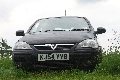
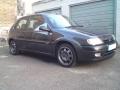
HID KITS ARE ILLEGAL TO USE ON SAXOs.
Unless the Goverment are liars:
http://www.dft.gov.uk/pgr/roadsafety/drs/hidheadlamps
Now you'll read it and say "aftermarket HIDS are legal" blah blah.
Read it again. They are not legal for a standard Saxo.
The major factor is this:
2. Once fitted to the vehicle it must have headlamp cleaning and self-levelling (which can be for the headlamp or can be in the vehicle suspension - some expensive estate cars have "self-levelling suspension" and that is adequate). Also the dipped beam must stay on with the main beam.
Show use is fine.
Just remember to take your bumper off and convert back to original bulb lamps before leaving for the road network.
UPDATE:
I emailed the Department for Transport. They intern put together the following reply to our questions:
Quote:
|
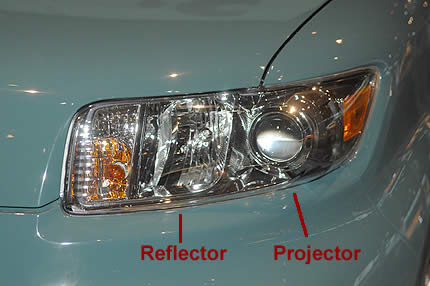
Just been emailed back from the Transport Technology and Standards Here it is: Dear Mr Kingston The information sheet on our website is the Departments view because the Department for Transport cannot provide an authoritative interpretation of the law; that is a matter for the courts. You should obtain expert legal advice if you intend to use an HID conversion kit. The Road Vehicles Lighting Regulations 1989 can be read on the internet at: http://www.opsi.gov.uk/si/si1989/Uksi_19891796_en_1.htm The Road Vehicle Lighting Regulations 1989 require headlamps to have an approval mark to show compliance with the relevant European legislation (see Schedule 4 of the RVLR). A lamp that is designed for use with a filament bulb will be approved to the specific regulation for these lamps, e.g. UNECE Regulation 112. Paragraph 14 of part II of the regulations states: Filament lamps 14.(1) Where a motor vehicle first used on or after 1st April 1986 or any trailer manufactured on or after 1st October 1985 is equipped with any lamp of a type that is required by any Schedule to these Regulations to be marked with an approval mark, no filament lamp other than a filament lamp referred to in the Designation of Approval Marks Regulations in- (a) regulation 4 and Schedule 2, items 2 or 2A, 8, 20, 37 or 37A; or (b) regulation 5 and Schedule 4, item 18, shall be fitted to any such lamp. This effectively means that only approved filament bulbs may be fitted to a lamp designed and approved for use with filament light sources. A HID light source is not a filament bulb and therefore cannot be used in a halogen lamp. The above basically prohibits the use of HID conversion kits, whether or not headlamp cleaners or automatic levelling are fitted. As stated in the factsheet, the only legal way to convert a vehicle to HID is to remove the existing lamp units (by lamp unit I mean the entire lamp including reflectors, lenses etc. not just the bulb) and replacing it with a lamp unit that has an approval mark to show it was approved for use with HID light sources, in this case UNECE Regulation 98. Once this is done there is then the issue of headlamp cleaners and automatic levelling. The RVLR require that headlamps should not be used so as to cause undue dazzle or discomfort to other persons using the road, Part III Para 27. Due to the high intensity of HID lights, they will cause dazzle if dirt accumulates on the lens or they become mis-aimed under different loading conditions. In our view the only way of preventing dazzle, and so complying with the regulations, is to fit automatic headlamp levelling and headlamp washers. This is already the accepted approach in European regulations, see UNECE Regulation 48. Finally, there are good safety reasons not to put a HID light source into a lamp designed for halogen bulbs. Recent tests carried out by the Department on two such kits showed that, although they produced a beam pattern that might pass the visual MOT test, the actual light intensity at specific points in the beam pattern that are controlled to minimise dazzle exceeded the minimum allowable values by a considerable margin. In addition these lights tended to put too much light directly in front of the vehicle rather than "throwing" it down the road where it is needed. This will tend to draw the drivers eye away from the distant road scene and give them less time to react to obstacles in the road. Yours sincerely Jillian Smith DfT Transport Technology and Standards |